If I Had Legs I’d Kick You: The Movie That Left Me Exhausted (And Where to Watch)
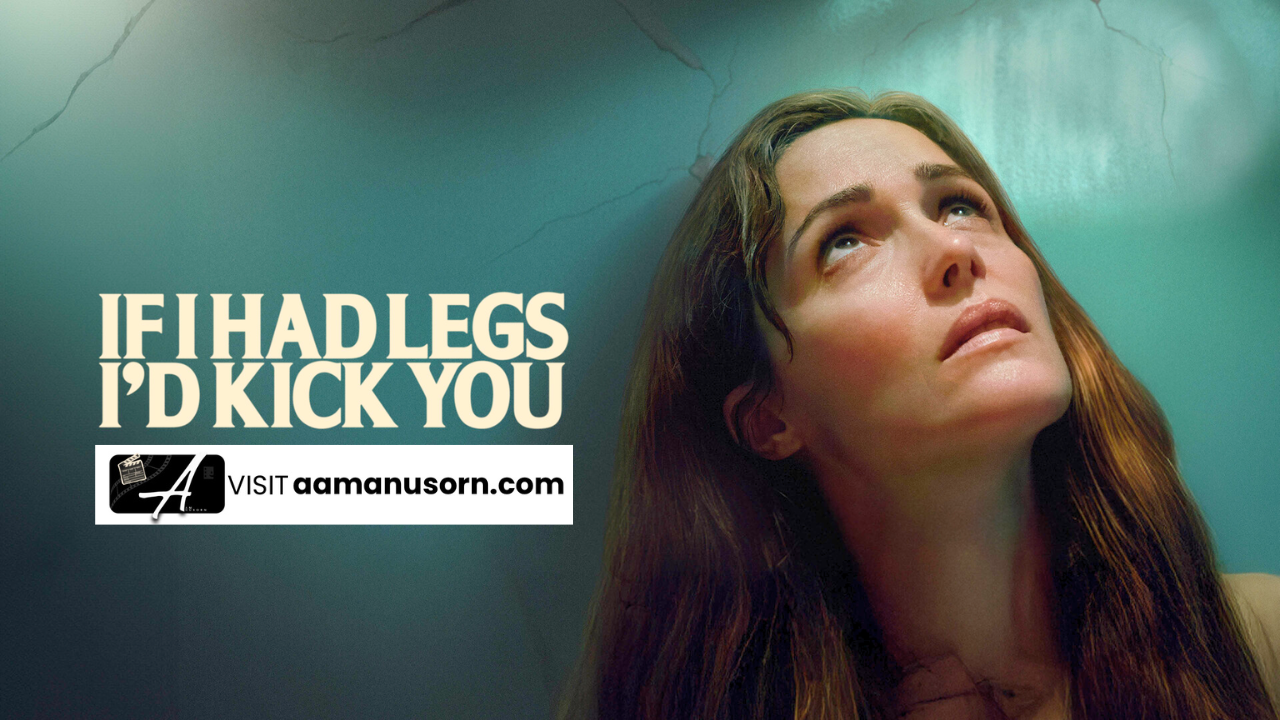
If I Had Legs, I'd Kick You
〰️
If I Had Legs, I'd Kick You 〰️
Where to Watch
If I Had Legs I'd Kick You is available to watch on Amazon
WATCH THE MOVIE ON AMAZONThis is an Amazon affiliate link. I may earn a small commission at no additional cost to you.
What happens when a filmmaker completely stops trying to please the audience? That was the first question that came into my mind after finishing If I Had Legs I'd Kick You. By the time the credits rolled, I wasn't smiling, crying, or even trying to decide whether I liked the movie. I was simply exhausted. I genuinely needed a nap. And strangely, I mean that as one of the biggest compliments I can give this film.
The movie follows Linda, a mother whose life is already hanging by a thread. Her daughter is dealing with a mysterious illness, her husband is away, her home is falling apart, and almost every person around her seems to need something she no longer has the energy to give. Instead of explaining everything clearly, the film throws us directly into Linda's anxiety and forces us to experience the world through her increasingly overwhelmed state of mind.
I have always known that Rose Byrne is a talented actress. I first remember seeing her in Bridesmaids, and later I watched her in movies like Insidious. She has always been beautiful, funny, emotionally precise, and incredibly watchable. But this performance surprised me on another level.
Rose Byrne is not simply the lead actress here. She is the entire movie. Almost every second depends on her face, her body, her breathing, her frustration, and the emotional pressure building underneath everything she says. The camera stays close to her for so long that it begins to feel less like watching an actress perform and more like watching someone survive one terrible day after another.
What impressed me most is that she never asks the audience to feel sorry for Linda. She allows the character to be exhausted, angry, confused, impatient, loving, selfish, frightened, and sometimes difficult to understand. It is a fearless performance because she does not try to make the character pleasant. She makes her human.
I also loved the way the movie was directed. This may sound strange, but I enjoy films where the filmmaker does not appear to care whether the audience will approve of every decision. The movie does not feel like it was created after a marketing meeting where people discussed the ideal target audience, age range, social media strategy, or what would make the story easier to sell.
It feels like the director simply decided, “This is the film I want to make, and this is how I want to make it.”
As a filmmaker, I respect that enormously. Too many projects today begin with questions such as: Who is going to watch this? Is it suitable for people aged eighteen to thirty-five? Can the trailer go viral? Will the audience understand the ending? This film does not seem interested in answering any of those questions. It trusts its own artistic instinct, and it trusts the audience enough not to explain every single detail.
There are also moments of violence that genuinely shocked me. The movie is not an action film, and it is not constantly graphic, which makes those moments even more effective. The violence often comes from small actions, sudden reactions, or ordinary situations that become disturbing without warning. I was not prepared for several of those scenes, and that unpredictability made them feel more intense.
The film understands that something does not have to be enormous to feel violent. Sometimes a tiny moment can be far more upsetting because it feels real, immediate, and completely out of control.
One of the most fascinating creative choices is the way the film presents Linda's daughter. For most of the movie, we do not properly see her face. We hear her voice. We see parts of her body. We may see her from behind. But the director never allows us to know her in the same way that we know Linda.
That decision creates a strange mystery around her. Is she truly there? Is she alive? Has something already happened to her? Is she a real child, a memory, a symbol, or a projection of Linda's guilt and fear? The movie never gives us a simple answer.
Even by the end, I still did not completely understand what was happening with the daughter, and I loved that. The uncertainty becomes part of the emotional experience. We are trapped inside Linda's world, and perhaps Linda herself no longer fully understands what is real, what she fears, or what she is trying to protect.
Many modern films are terrified of leaving questions unanswered. Every mystery must be explained. Every character must have a clear motivation. Every ending must tell the audience exactly what happened. If I Had Legs I'd Kick You refuses to do that. It allows confusion, discomfort, exhaustion, and ambiguity to remain.
This is not an easy film. It is not relaxing, and it is definitely not designed to please everyone. But that is exactly why I admired it. Rose Byrne gives one of the most intense and committed performances I have seen from her, and the film surrounding her feels bold, strange, emotionally violent, and completely confident in its own vision.
When the movie ended, I felt drained. I needed to lie down. I needed silence. But I also knew I had watched something that respected me enough not to explain itself, simplify itself, or ask for my approval.
And honestly, I wish more movies had that courage.
Affiliate disclosure: As an Amazon Associate, I may earn a commission from qualifying purchases made through this link at no additional cost to you.