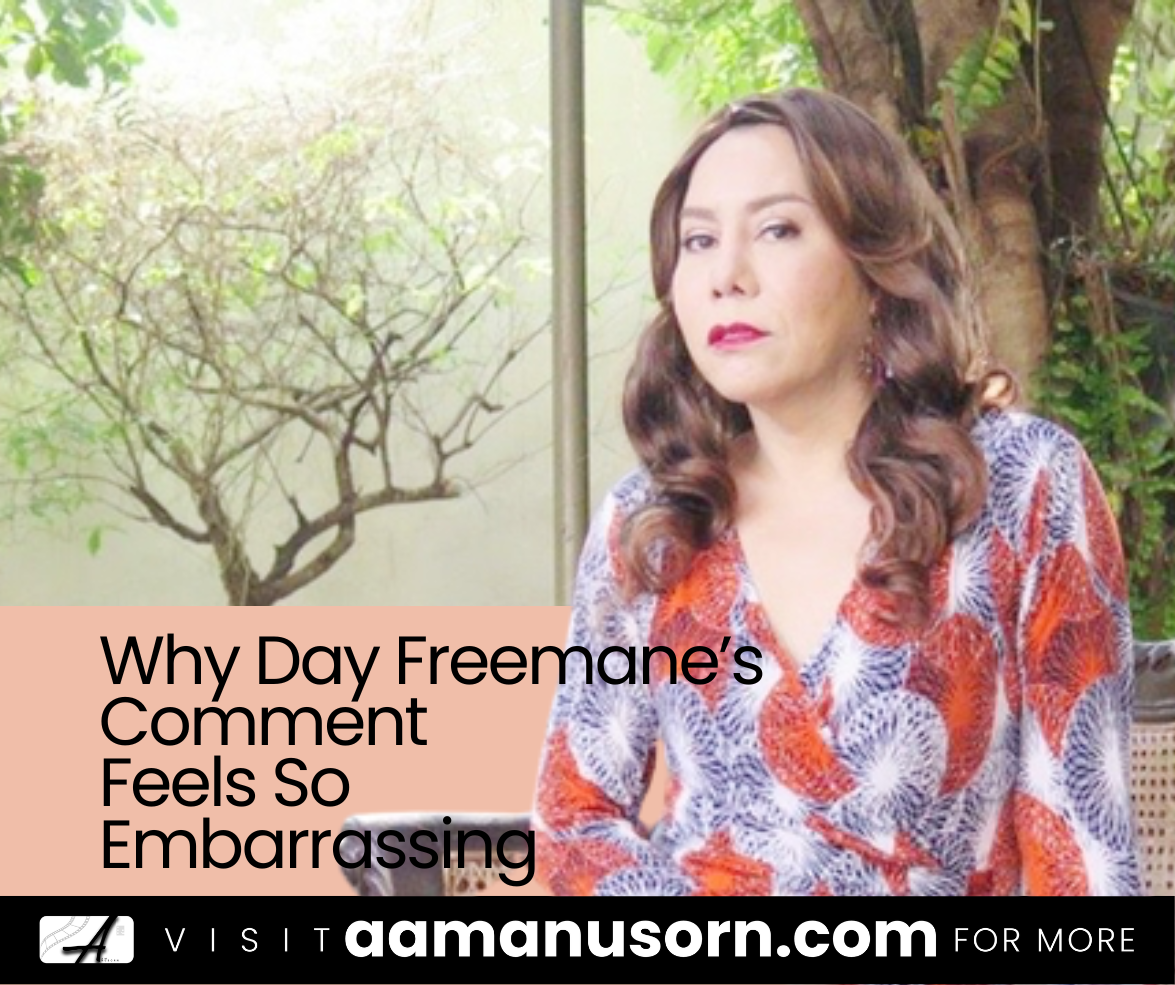
Why Day Freemane’s Comment Feels So Embarrassing
In 2026, with AI everywhere, with technology moving faster than ever, with society constantly congratulating itself for being modern, it is honestly humiliating that we are still having to respond to language that ranks human beings as if dignity were property.
That is why this whole moment feels so embarrassing to me. It is not just offensive. It is outdated, unnecessary, and painfully revealing of how shallow our idea of “progress” can still be.
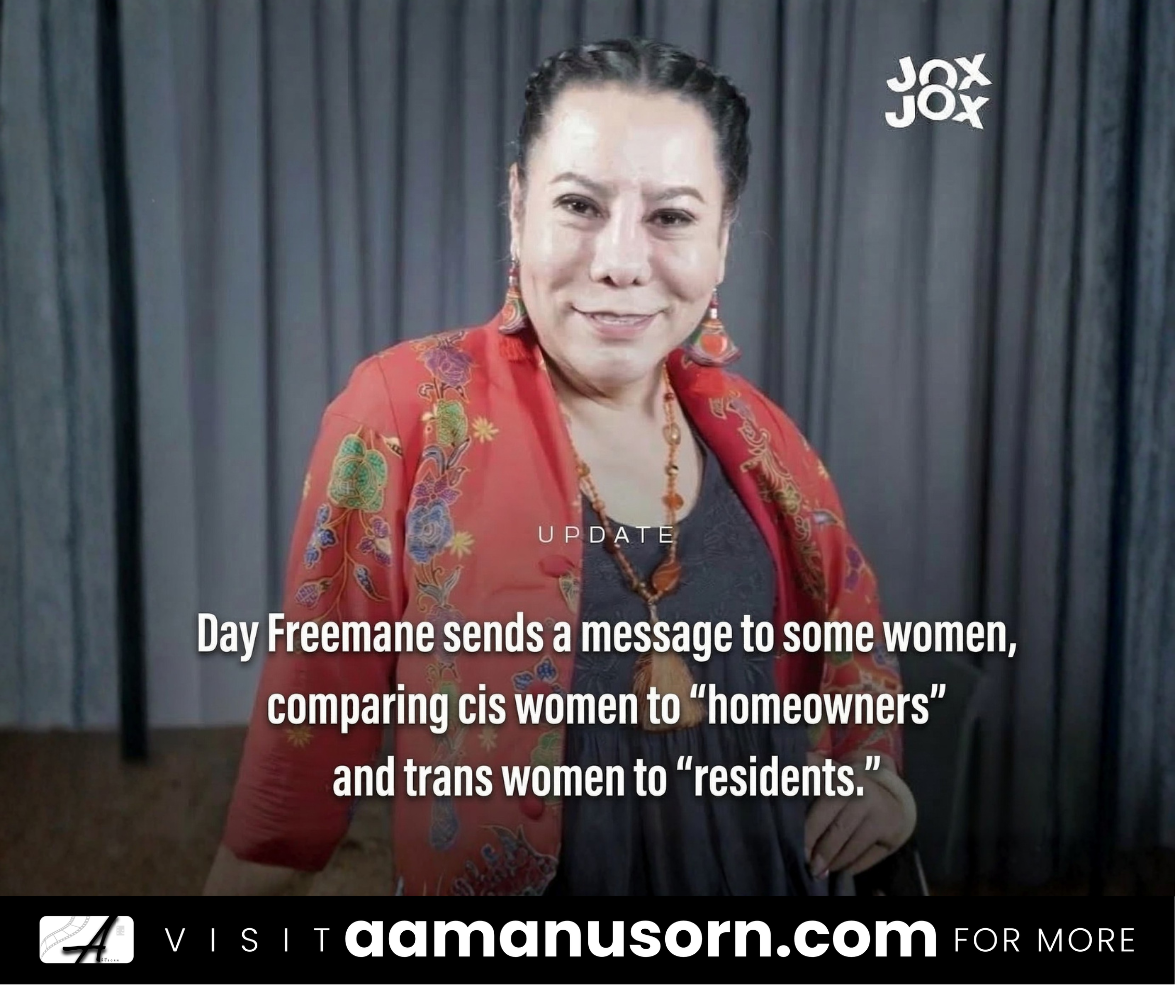
The controversy centers on Day Freemane, a long-visible Thai entertainment figure who has been described in Thai media as a legendary cabaret performer, actress, and LGBTQ public personality. Coverage of her past interviews also presents her as an LGBTQ mother figure and someone who has spoken publicly for years about family, stigma, and gender diversity. In other words, this is not a random anonymous comment from nowhere. It comes from someone with public recognition, cultural visibility, and influence. That is exactly why people are reacting so strongly.
The reported statement that triggered backlash compared cisgender women to “homeowners” and trans women to “residents” or people merely “staying” in that space. The meaning underneath that metaphor is not subtle. It frames cis women as the legitimate “owners” of womanhood and trans women as people who may exist near that identity, but never fully belong to it. That is not a harmless metaphor. It is a hierarchy. It is a way of saying one group is more real, more authentic, more entitled than another.
And that is exactly why this has such an impact on the transgender community.
This is not happening in a vacuum. In Thailand, even after major LGBTQ progress, such as the marriage equality law taking effect in January 2025, transgender people still face major legal recognition gaps. Reuters reported that while Thailand’s same-sex marriage law was a landmark progress, transgender people still could not legally change their gender. Human Rights Watch has also documented that transgender people in Thailand have no real route to legal recognition of their gender identity, leaving them exposed to discrimination in everyday life.
That context matters a lot. Because this debate is not only about feelings, language, or online drama. It is directly tied to a very real fight over whether transgender people in Thailand can use honorifics and official forms of address that reflect who they are. Just this month, Bangkok Post and Khaosod English both reported renewed public debate over whether transgender people should be able to amend titles such as Mr., Miss, or Mrs. to match their gender identity. So when a public figure uses a metaphor suggesting trans women are only “occupants” of womanhood, it lands inside an already unequal legal and social reality.
That is why it hurts. That is why people are angry.
That is why this is bigger than one comment.
Because when transgender people are already fighting to have the state recognize their existence with something as basic as a title, any public statement implying they are not “real” enough becomes part of a larger system that keeps pushing them down. It reinforces the same logic that says some people deserve full recognition while others must keep asking permission. Human Rights Watch’s reporting makes clear that the lack of legal recognition in Thailand is not abstract; it creates daily barriers and deepens vulnerability to discrimination.
That is why I find this so deeply disappointing.
And honestly, it is even more disappointing because Day Freemane is not an obscure figure with no connection to LGBTQ visibility. She has benefited from being known publicly as part of Thailand’s entertainment and LGBTQ landscape. Thai media has framed her as someone who has helped build understanding around LGBTQ lives through visibility, interviews, and long-term presence in the public eye. That does not mean she must agree with everyone. But it does mean her words carry weight. And when someone with that kind of cultural presence uses language that many hear as diminishing trans women, the damage is bigger.
This is what makes the moment feel so contradictory. On one hand, Thailand is often praised internationally as LGBTQ-friendly and visible. Reuters noted years ago that transgender women are highly visible in entertainment, beauty pageants, and public culture. On the other hand, visibility has never been the same thing as equality. That contradiction is one of the most frustrating truths in Thailand: a community can be visible, marketable, and culturally familiar, while still being denied full dignity under the law and still being discussed as if its identity is conditional.
So no, I do not see this as some deep philosophical statement. I do not see it as a clever metaphor. I see it as old prejudice in a new outfit. I see it as the same tired urge to control who gets to belong and who must stay grateful for partial acceptance. And I think it is embarrassing that in 2026, when people love to talk about being advanced, we are still hearing public language that treats one group as the rightful owners of dignity and another as if they should “know their place.”
What makes a society modern is not AI. It is not speed. It is not apps, branding, or futuristic headlines. It is whether people can respect each other’s humanity without needing to reduce, rank, or humiliate one another. And when we fail that test, all the technology in the world means nothing.
That is my real disappointment here.
I am disappointed that this language was said.
I am disappointed that it was said publicly.
I am disappointed that it came from someone whose public life has intersected with LGBTQ visibility.
And I am disappointed that the transgender community still has to explain, again and again, why being treated as less-than is not a “difference of opinion” but an attack on dignity.
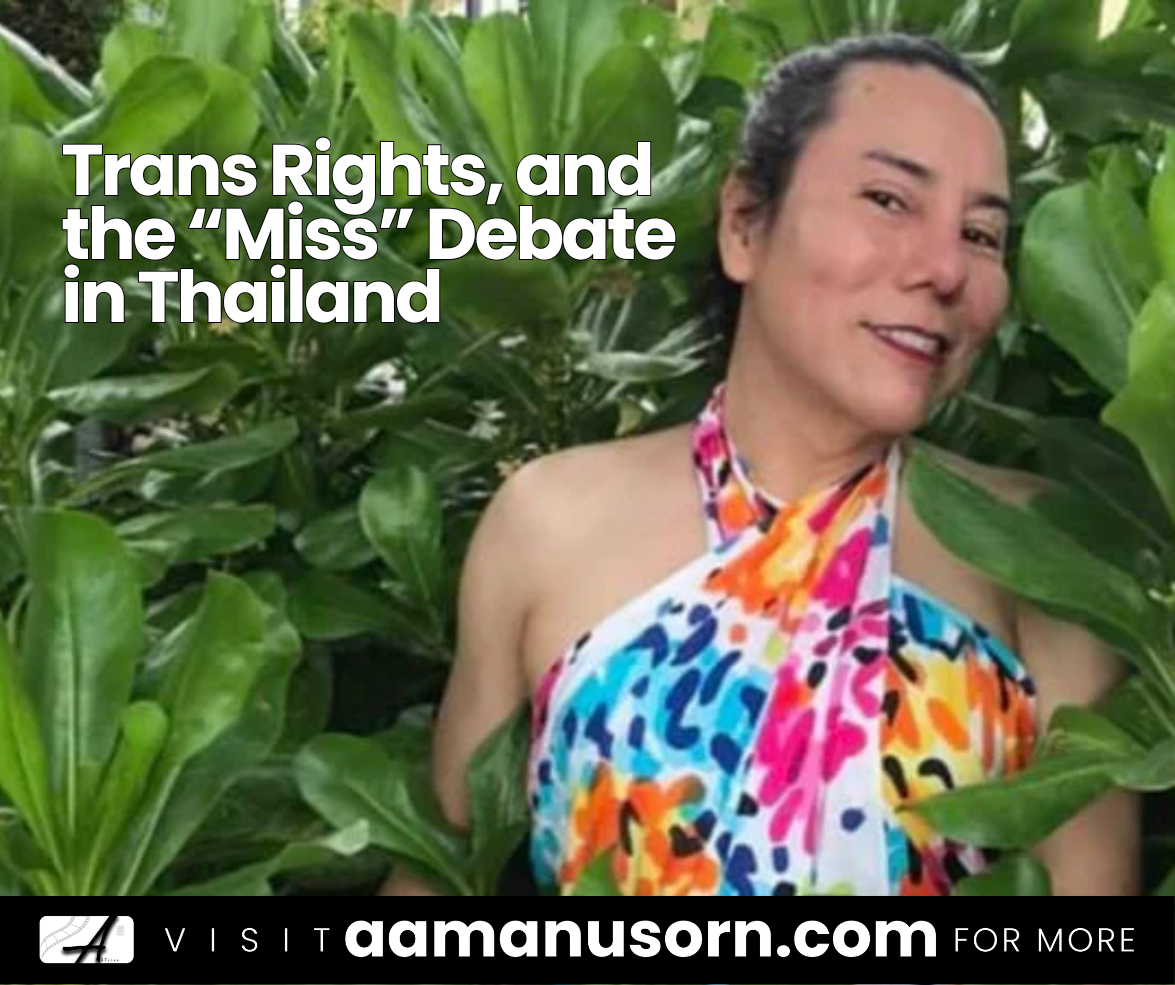
If society starts accepting the idea that some people “own” identity while others merely “occupy” it, what breaks is not only the feelings of one group. What breaks is the moral standard of the whole society.
And that, to me, is the most embarrassing part of all.
Image credit: JoxJox page.